
Comic books typically come with a juvenile stigma attached. When people ask what you’re reading and you say Faulkner, you get a nod of respect. However, If you say Ghost Rider, you will likely get an eye roll. (At least, that’s how it was pre-Big Bang Theory, anyway. That show made being a nerd acceptable, and whether you enjoyed the show or not, I think we can all be thankful for it bridging the gap between the cool kids and the geeks.) Most people have no idea that the latest run of Ghost Rider follows a Hispanic teenager/young adult, working as a mechanic to support and care for his disabled younger brother who’s bound to a wheelchair. The character development in most comic books is phenomenal. Iron Man has had struggles with alcoholism, and Green Lantern & Green Arrow have had to deal with the death of a sidekick due to a drug overdose. The story arcs are broken up into small chunks, but they’re enthralling. They must be entertaining, or they wouldn’t still exist. Just like “regular” books. Besides, they’re called comic “books”, doesn’t that automatically give them credit for being real books? What about graphic “novels”? Any difference there? The article at this link does a nice job of touching on all of these questions, so I won’t rehash what they’ve already covered.
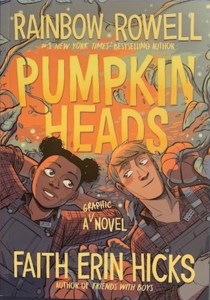 Let’s take a look at the cover of “Pumpkin Heads” by Rainbow Rowell and Faith Erin Hicks. The first thing to notice is that Rowell is clearly labeled as a #1 New York Times bestselling author. That is a massive achievement for any author, and automatically gives legitimacy without even opening the book. The second thing worth noting is the part where it labels itself as a graphic novel. It very plainly identifies as a novel, but recognizes that there is art involved, which is why they shoehorn the word “graphic” in there. This is obviously just one example of the countless graphic novel offerings, but it makes quite a compelling argument I’d say.
Consider a couple other reputable authors who have ventured over into the graphic novel side of the publishing industry. Chuck Palahniuk, most notably of Fight Club fame, decided to use comic books to tell his story for Fight Club 2 instead of writing another novel for the sequel to the massively successful book. While there was a lot of criticism for that series, it hasn’t stopped Dark Horse Comics from announcing plans for Fight Club 3, which Palahniuk will maintain creative control over. Kurt Vonnegut’s timeless classic, Slaughterhouse Five, is also getting the graphic novel treatment. How’s that for legitimacy?? Continue reading →

 CK Fiction